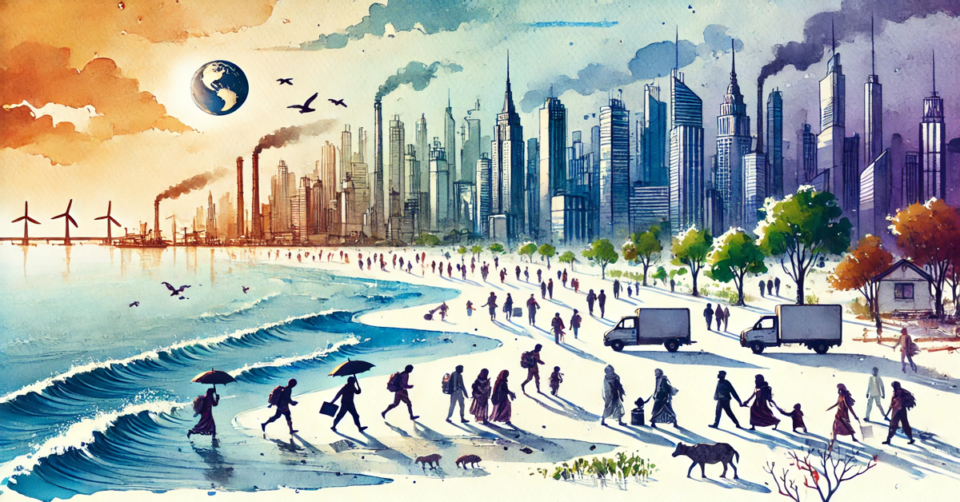


Introduction
Defining Key Terms:
- Climate Change: A long-term change in the earth’s climate, especially a change due to an increase in the average atmospheric temperature. Changes are driven by factors including volcanic eruptions, solar radiation, and human activities, notably burning fossil fuels which increase heat-trapping gases in the earth’s atmosphere.
- Coexistence: Living in harmony despite varied backgrounds and beliefs. In the context of this article, it refers to the ability of communities impacted by climate change to live together peacefully, managing shared resources and opportunities.
- Migration: The movement of people from one place to another with the intentions of settling, permanently or temporarily, at a new location. This movement can be voluntary or forced, often influenced by economic, social, political, or environmental reasons.
Global Context of Climate Change:
Climate change is reshaping our planet’s environment, creating profound impacts on natural and human systems alike. Rising global temperatures, increasing sea levels, and extreme weather events are not just environmental issues—they also pose significant challenges to human populations:
- Direct Impacts: These include increased heatwaves, floods, droughts, and storms that directly affect human livelihoods, health, and survival. Such conditions can decimate agriculture, disrupt water supplies, and damage homes, leading to increased mortality and forced migrations.
- Indirect Impacts: Beyond physical changes, climate change also affects social, economic, and political stability. As resources like land and water become scarce, competition intensifies, potentially leading to conflicts and increased migration pressures. This dynamic poses challenges to coexistence, as incoming populations integrate into new communities with existing socio-economic structures.
Understanding Climate Change and Its Environmental Effects
Scientific Basis of Climate Change:
Climate change refers to significant changes in global temperatures and weather patterns over time. While climate variability is a natural phenomenon, recent trends are predominantly the result of human activities, particularly the emission of greenhouse gases like carbon dioxide and methane. Key phenomena associated with climate change include:
- Rising Temperatures: The global average temperature has increased significantly over the past century, with the last decade being the warmest on record. This warming is due to the enhanced greenhouse effect caused by increased concentrations of greenhouse gases in the atmosphere.
- Sea Level Rise: As global temperatures rise, so do sea levels. This occurs due to the thermal expansion of seawater and the melting of ice sheets and glaciers. Rising sea levels threaten coastal communities and ecosystems, leading to increased flooding and erosion.
- Increased Frequency of Extreme Weather Events: There is growing evidence that climate change is making extreme weather events more frequent and severe. This includes hurricanes, droughts, heatwaves, and heavy rainfall events, which can have devastating impacts on human and natural systems.
Immediate Environmental Effects:
The environmental impacts of these climate phenomena are broad and deeply interconnected:
- Habitat Loss: Rising temperatures and shifting weather patterns can alter natural habitats rapidly, making them inhospitable for many species. This is particularly evident in sensitive ecosystems like coral reefs and polar regions, where the impacts are already visible.
- Reduced Agricultural Productivity: Changes in temperature and precipitation patterns significantly affect agricultural productivity. Increased heat and drought stress crops, reduce yields, and can lead to crop failure, while unpredictable weather patterns make farming more challenging.
- Biodiversity Threats: Climate change is one of the primary threats to global biodiversity. Species that cannot adapt to rapidly changing conditions face increased risk of extinction. This loss of biodiversity reduces ecosystem resilience, affecting ecosystem services upon which humans rely.
The scientific evidence for climate change is unequivocal, and its effects on the environment are profound. Understanding these impacts is crucial for developing strategies to mitigate climate change and adapt to its effects, ensuring the preservation of biodiversity and the sustainability of human communities.
Climate Change as a Driver of Migration
Climate-Induced Migration Dynamics:
Environmental changes triggered by climate change are increasingly becoming a significant driver of migration across the globe. These migrations occur in several contexts:
- Internal Migration: Often the first response to environmental distress, internal migration involves moving within the country to safer areas. This might be from rural areas severely affected by drought or floods to urban centers, seeking better living conditions and opportunities.
- International Migration: In more severe scenarios, where the environmental degradation crosses thresholds that make local adaptation impossible, affected populations may seek refuge in other countries. This is often seen in small island nations severely impacted by sea-level rise or countries experiencing persistent and extreme drought.
Case Studies of Climate-Driven Migration:
To understand the practical implications of climate-induced migration, several case studies highlight the urgency and scale of this issue:
- The Sahel Region (Drought): In the Sahel region of Africa, prolonged periods of drought have devastated traditional farming and pastoralist livelihoods. This has led to significant internal and cross-border migrations to more fertile lands and major cities. The migrations are often driven by the need to find work and sustainable living conditions as local resources become increasingly scarce.
- Bangladesh (Floods): Bangladesh experiences frequent and severe flooding, exacerbated by climate change. The floods not only displace thousands of people annually but also impact long-term migration patterns, with many moving to cities like Dhaka. The urban areas, however, struggle to cope with the influx, leading to overcrowded living conditions and increased poverty.
- Hurricane Katrina, USA (Hurricane): Hurricane Katrina demonstrated how severe weather events, influenced by climate change, can lead to massive displacement. Over a million people were temporarily or permanently displaced, showing how even developed nations are not immune to climate-induced migration.
The link between climate change and migration is clear and presents significant challenges for global governance and local community resilience. As environmental conditions continue to deteriorate due to climate change, the scale of migration is likely to increase, necessitating robust responses from both national and international bodies to manage the social, economic, and political implications of these movements.
The Socioeconomic Implications of Climate-Induced Migration
Impact on Originating Communities:
The departure of populations due to climate change can deeply impact the socioeconomic structures of the communities left behind:
- Labor Shortages: As working-age individuals migrate in search of better opportunities, the remaining community may experience a shortage of labor, particularly in agriculture and other primary industries, which can hinder local economies.
- Aging Populations: With younger individuals more likely to migrate, the age demographic of the remaining population may skew older, increasing the dependency ratio and placing additional pressures on social services.
- Reduced Economic Activity: The reduction in population can lead to decreased economic activity, lower consumer spending, and a decline in local business viability, further impoverishing the remaining inhabitants.
Impact on Receiving Communities:
Receiving communities also face significant challenges as they try to integrate new arrivals:
- Urban Strain: Many migrants move to urban areas, which can lead to overburdened infrastructure, insufficient housing, and increased competition for public services such as healthcare and education.
- Employment Challenges: Integrating migrants into the local economy can be difficult, especially if there is already high unemployment. Newcomers may face discrimination in the labor market or may lack the skills needed for available jobs.
- Resource Allocation: The sudden increase in population can strain natural resources, including water and energy supplies, and exacerbate environmental degradation in the area.
Highlighted Issues:
Several key issues highlight the broader socioeconomic implications:
- Economic Integration: Effective economic integration of migrants is crucial for maximizing their contributions and minimizing negative impacts on local economies. This may require targeted training programs and policies to match migrant skills with market needs.
- Social Cohesion: Managing social tensions and fostering integration are critical for maintaining peace and cohesion in diverse communities. This includes promoting cultural understanding and providing platforms for interaction between migrants and local residents.
- Policy Response: Both local and national governments need to develop robust policies that prepare for and manage the effects of migration. This includes planning for housing, employment, social services, and infrastructure to support an increased population sustainably.
Example in Practice:
In cities like Miami, which are expected to see significant impacts from sea-level rise, local governments are exploring ways to accommodate potential newcomers from more affected regions while planning for their own sustainable development. These plans include adaptive urban planning and employment programs aimed at integrating migrants into the local economy without overwhelming existing systems.
Climate Migration and Challenges to Coexistence
Challenges in Host Communities:
The influx of migrants due to climate change can create several significant challenges for host communities:
- Social Tension and Xenophobia: The sudden increase in population can lead to social tension between newcomers and established residents. Perceived competition for jobs, housing, and social services can fuel xenophobic attitudes and discrimination against migrants.
- Cultural Integration Issues: Integrating into a new cultural environment can be challenging for migrants, and receiving communities may also struggle with adapting to the increased cultural diversity. Misunderstandings and cultural clashes can complicate integration efforts and exacerbate social tensions.
- Pressure on Local Resources: Climate migrants often move to areas with better resources and opportunities, which can put pressure on these resources, straining both environmental and economic capacities and potentially leading to conflicts over resource allocation.
Instances of Conflict and Cooperation:
While climate migration can lead to conflicts, it also provides opportunities for cooperation and community building. Here are specific instances that illustrate both outcomes:
- Conflict Example – Lake Chad Basin: In the Lake Chad Basin, severe drought and environmental degradation have exacerbated conflicts among local communities, migrants, and displaced persons over scarce water and land resources. The competition for dwindling resources has intensified ethnic and communal tensions, contributing to the region’s instability.
- Cooperation Example – Alaska Native Villages: In Alaska, some native villages are facing imminent threats from rising sea levels and coastal erosion, leading to planned relocations. In these instances, there has been notable cooperation between governmental agencies and indigenous communities to ensure culturally sensitive and sustainable relocation plans, fostering a cooperative spirit in the face of shared challenges.
Strategies for Enhancing Coexistence:
To address these challenges and promote coexistence, several strategies can be effective:
- Community Engagement Programs: Initiatives that bring together local residents and migrants to foster mutual understanding and collaboration can be very effective. This might include community-building activities, intercultural dialogues, and joint community service projects.
- Inclusive Policy Making: Policies designed to ensure equitable access to resources and opportunities for all community members can help mitigate potential conflicts. This includes fair housing, employment practices, and access to education and healthcare.
- Cultural Competency Training: Providing training for both migrants and host community members on cultural competency can reduce misunderstandings and promote appreciation for diversity, thereby enhancing social cohesion.
By understanding and addressing the complex challenges associated with climate-induced migration, communities can better navigate the path towards peaceful coexistence. This section not only highlights the potential for conflict but also the opportunities for cooperation, providing a balanced view of the impact of climate migration on social dynamics.
Legal and Policy Responses to Climate Migration
Existing Legal Frameworks and Policies:
Climate-induced migration presents unique challenges that require tailored legal and policy responses:
- National Policies: Various countries have begun to recognize climate migration in their national policies, though responses vary significantly. Some nations, particularly those in vulnerable regions like the Pacific Islands, have started to incorporate climate migration strategies into their national climate action plans, focusing on both mitigation and relocation strategies.
- International Legal Frameworks: Internationally, climate migration falls at the intersection of environmental and refugee law, but it remains inadequately covered by existing treaties. The 1951 Refugee Convention, for instance, does not recognize climate migrants as refugees, leaving a significant gap in international legal protection.
Gaps in Current Policies:
Despite some progress, substantial gaps remain in addressing the full scope of challenges posed by climate migration:
- Lack of Definition and Recognition: There is no universally accepted definition of a “climate migrant,” complicating legal protections and assistance programs. This lack of recognition hinders the development of targeted aid and resettlement programs.
- Inadequate Support Structures: Existing policies often fail to address the long-term resettlement and integration needs of climate migrants, focusing instead on immediate disaster response. Long-term support, including job training, education, and cultural integration, is frequently insufficient.
- Limited Scope of International Agreements: Current international agreements often do not account for cross-border displacement caused by gradual environmental degradation, focusing instead on sudden natural disasters.
Need for Comprehensive International Cooperation:
To effectively manage climate-induced migration, a more comprehensive approach is necessary:
- Expanding Legal Definitions and Protections: Updating international treaties to include climate migrants and establishing new guidelines for their protection and assistance can provide a more robust legal framework.
- Coordinated International Response: Enhanced international cooperation is crucial for managing the cross-border nature of climate migration. This includes shared strategies for disaster preparedness, resource allocation, and economic assistance.
- Integrated Approach to Policy Making: Policies need to integrate climate change adaptation, disaster risk reduction, and development planning to address the root causes and consequences of migration comprehensively.
Example in Practice:
The Platform on Disaster Displacement, endorsed by the Nansen Initiative, is an example of an effort to address the gaps in international policies related to disaster-induced displacement, which includes climate-related movements. It aims to improve the understanding, prevention, and management of displacement through cooperation at various levels.
By critically examining the current legal and policy frameworks, this section highlights the urgent need for enhanced measures and international collaboration to adequately respond to the growing challenge of climate-induced migration.
Innovative Approaches to Enhancing Coexistence
Innovative Strategies and Programs:
Various innovative approaches have been developed to foster coexistence and help integrate migrants displaced by climate change into new communities:
- Community-Based Integration Projects: These projects focus on integrating migrants by involving them in community development that benefits both the migrants and the host community. This can include joint educational programs, community gardening projects, or local economic development initiatives that foster a sense of shared purpose and mutual benefit.
- Cultural Exchange Programs: Programs that facilitate cultural exchanges between migrants and host communities can enhance understanding and reduce potential tensions. These might involve cultural orientation sessions for both migrants and local residents, language exchange programs, and public storytelling events to share experiences and histories.
- Technology-Driven Solutions: Innovative use of technology can help bridge gaps between migrant populations and host communities. Apps and platforms that provide localized information on services, legal rights, and community events are examples of how technology can aid integration and foster coexistence.
Role of Various Organizations:
The successful implementation of these strategies often relies on the collaborative efforts of multiple stakeholders:
- International Organizations: Entities like the United Nations High Commissioner for Refugees (UNHCR) and the International Organization for Migration (IOM) play critical roles in policy development and implementation, providing guidance and support for integrating climate migrants.
- NGOs: Non-governmental organizations often work on the ground to execute integration programs and act as mediators between migrants and host communities. They are pivotal in providing immediate assistance and long-term integration services.
- Local Communities and Governments: Local governments are crucial in implementing policies that facilitate integration and coexistence. Community leaders and local groups can foster inclusive environments through education and local engagement initiatives.
Examples in Practice:
- In Bangladesh, NGOs have partnered with local governments to create resettlement housing that incorporates space for both local residents and incoming climate migrants, promoting interactions and community bonding through shared facilities.
- The “Refugees Welcome” initiative, which started in Germany and spread across Europe, uses an online platform to match refugees, including those displaced by climate, with locals who have spare rooms, fostering a personal approach to integration.
This section not only highlights the innovative approaches to integrating climate migrants but also underscores the collaborative nature of these efforts, involving a broad spectrum of global and local actors. By showcasing these initiatives, the discussion emphasizes practical solutions to enhance coexistence in increasingly diverse communities affected by climate change.
Future Projections: Climate Change, Migration, and Global Coexistence
Predictions Based on Current Trends:
As climate change continues to alter environmental and social landscapes, its effects on migration and coexistence are expected to become more pronounced:
- Increased Migration Flows: Predictions suggest that the number of people displaced by climate change will continue to rise. According to the World Bank, without concrete climate and development action, there could be more than 140 million internal climate migrants across Sub-Saharan Africa, South Asia, and Latin America by 2050.
- Urbanization and Urban Strain: As more climate migrants move to cities, the strain on urban infrastructure and services is likely to increase, potentially leading to heightened socio-economic disparities and increased tensions within urban settings.
- Regional Hotspots of Climate Conflict: Certain regions, particularly those already experiencing water scarcity and food insecurity, might become hotspots for conflicts exacerbated by climate-induced migration. This could challenge global stability and necessitate international interventions.
Global Scenarios and Proactive Measures:
Understanding these projections helps in planning proactive measures to mitigate the impacts and foster global coexistence:
- Strengthening Resilience and Adaptation Strategies: Enhancing the resilience of vulnerable communities through improved infrastructure, sustainable agriculture practices, and access to clean water and healthcare can reduce the necessity for migration as a survival strategy.
- Comprehensive Migration Policies: Developing inclusive and comprehensive migration policies that recognize climate migrants and offer them protection and support can aid in smoother integration and coexistence. International cooperation will be crucial in crafting these policies to ensure they are equitable and far-reaching.
- Investing in Conflict Prevention and Peacebuilding: As areas become more prone to conflict due to resource scarcity and population shifts, investing in conflict prevention and peacebuilding will be crucial. This includes supporting local peace initiatives and strengthening international mechanisms for conflict resolution.
- Harnessing Technology and Innovation: Leveraging technology to forecast migration trends, optimize resource allocation, and foster communication and understanding between diverse groups can help manage the complexities of climate-induced migration and coexistence.
The interaction between climate change, migration, and coexistence presents both challenges and opportunities. By anticipating future scenarios and implementing proactive measures now, global communities can work towards a more stable and harmonious world where the impacts of climate change are managed and migration is recognized as a natural and manageable aspect of human society.
This section provides a forward-looking perspective on the nexus of climate change, migration, and coexistence, emphasizing the importance of proactive global efforts to address these interconnected challenges. By highlighting specific predictions and suggesting strategic measures, it aims to inform and inspire action among policymakers, community leaders, and global citizens alike.
Conclusion
Climate change is not a distant threat but a present reality, deeply influencing migration patterns and the fabric of global coexistence. This article has outlined how environmental alterations drive significant human migrations, impacting both the origin and receiving communities socioeconomically and culturally. The challenges that arise from this dynamic are complex, involving not just environmental and economic adjustments but also profound social and cultural shifts.
The need for comprehensive and proactive global policies is undeniable. As climate change continues to reshape our world, the ability to adapt and manage its impacts on migration will be crucial for maintaining global stability and peace. International cooperation, robust policy frameworks, and inclusive community engagement are essential to navigate this unprecedented global challenge effectively.
Key Takeaways
- Recognize the Scope: Understand that climate change is a powerful driver of migration, and its effects on coexistence are profound and far-reaching.
- Foster Resilience: Build resilience in vulnerable communities through adaptive strategies to reduce the necessity for migration as a coping mechanism.
- Implement Inclusive Policies: Develop and implement migration policies that are inclusive and acknowledge the unique challenges posed by climate change.
- Promote International Cooperation: Enhance international cooperation to manage climate-induced migration effectively, ensuring that policies are equitable and supportive of both migrants and host communities.
- Invest in Conflict Prevention: Prioritize investments in conflict prevention and peacebuilding in areas most likely to be affected by climate-induced disputes over resources and migration.
- Utilize Technology: Leverage technology to better predict migration patterns, manage resources efficiently, and facilitate better understanding and integration among diverse communities.
Frequently Asked Questions
Q: How does global warming influence species coexistence in various ecosystems?
A: Global warming significantly impacts species coexistence by altering the climatic conditions necessary for individuals and communities to thrive. Alterations in temperature and precipitation patterns can disrupt the delicate ecological balance, leading to shifts in vegetation types, species richness, and biomass within communities. This can result in a decline in biodiversity and changes in trophic interactions, which are critical for healthy ecosystem functioning. Moreover, warming can cause a mismatch in the evolutionary adaptations of species to their environment, threatening their ability to coexist.
Q: What role does climate change play in the migration patterns of alpine plant communities?
A: Climate change, particularly warming, has a profound effect on alpine plant communities, forcing them to migrate to higher elevations in search of cooler, more suitable climate conditions. This gradient shift is integral to maintaining the ecological balance, as it involves the movement of plant species and the animals that rely on them for food and habitat. However, there’s a conflict of interest as these migrations can lead to increased competition for space and resources, potentially disrupting established species coexistence and leading to a loss in biodiversity.
Q: Can climate change experiments provide insights into future ecological balances?
A: Yes, climate change experiments that simulate future climatic conditions and their effects on ecosystems are crucial for understanding potential shifts in ecology and species coexistence. These experiments, such as those modifying soil water content or temperature, help scientists analyze the data regarding plant communities’ growth rate, biomass production, and species richness response to climate change. Insights from these studies are pivotal in predicting how ecosystems will adapt, which species might thrive or decline, and how coexistence within communities will be reshaped in the face of global warming.
Q: How critical is the study of gradients in understanding the effects of climate change on ecosystems?
A: Studying gradients, such as elevation or temperature gradients, is critical in understanding the effects of climate change on ecosystems because they naturally encapsulate a range of climatic conditions within a relatively small area. This allows researchers to observe how variations in climate across the gradient influence ecological dynamics, species coexistence, and biodiversity. Gradients serve as natural laboratories where the impacts of climate warming on plant communities, species interactions, and trophic dynamics can be closely observed, offering valuable insights into broader ecological patterns and processes.
Q: What are some specific threats global warming poses to coexistence within communities of mediterranean forested areas?
A: Mediterranean forested areas, characterized by their biodiversity and complex ecological networks, face several threats from global warming. These include increased risk of droughts, which can reduce soil water content and negatively impact plant species’ growth rates and biomass. Warm temperatures can also lead to changes in species composition and reduction in species richness, altering the proportional representation within communities. Furthermore, the exacerbated frequency of wildfires can devastate ecosystems, destroying habitats and making it difficult for species to coexist as before. Such climatic stressors challenge the resilience of Mediterranean forested communities.
Q: How do climate change impacts on soil moisture content affect plant species and their coexistence?
A: Climate change impacts on soil moisture content directly affect plant species and their ability to coexist by altering the fundamental resources available for growth. Decreased soil water content can limit plant growth, reduce biomass, and lead to a decline in species richness. These changes disrupt the ecological balance, affecting species coexistence and changing the composition of plant communities. Drier conditions can favor species adapted to drought, leading to shifts in the dominant vegetation types and potentially reducing overall biodiversity and ecosystem functionality.
Q: What is the significance of ecology in the context of climate change and species migration?
A: Ecology plays a pivotal role in understanding the complex interactions between climate change and species migration. It provides the framework for studying how changes in climate conditions, such as temperature and precipitation patterns, influence species’ distribution, behavior, and coexistence. Through ecological studies, scientists can predict which species are most likely to migrate, how these migrations will affect current ecosystems, and identify strategies to mitigate adverse effects. Understanding ecological principles is essential for developing conservation measures that support biodiversity and ecosystem services in the face of ongoing climate change.
Q: How do climate change experiments contribute to our understanding of species richness and ecosystem stability?
A: Climate change experiments are fundamental in enhancing our understanding of how changes in climatic conditions affect species richness and ecosystem stability. By creating controlled environments that mimic future climate scenarios, researchers can observe how different plant and animal species respond to changes in temperature, moisture levels, and other climatic factors. These experiments reveal patterns of resistance and adaptability among species, offering insights into how ecosystems might reorganize in response to climate change. Such knowledge is crucial for the development of strategies aimed at preserving species richness and maintaining the stability of ecosystems in a rapidly changing world.