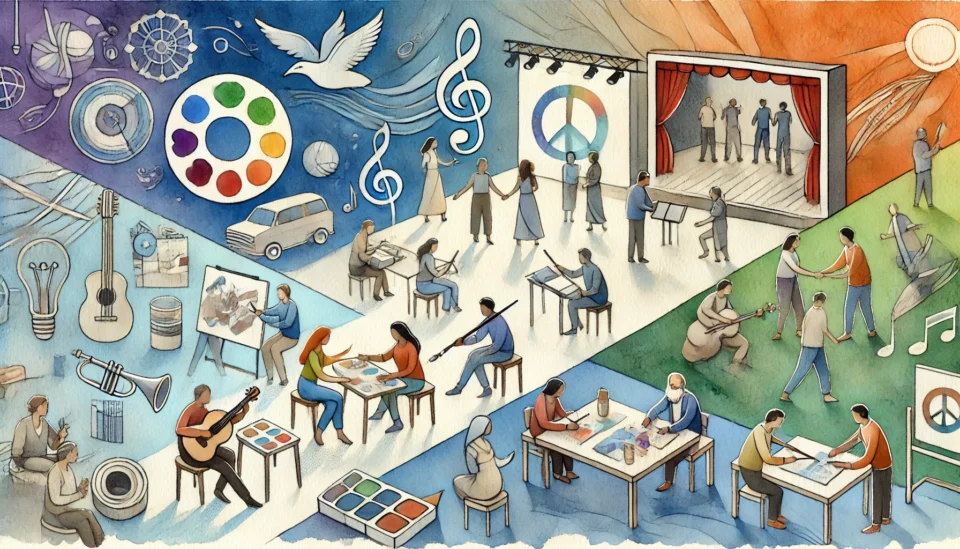


In the complex tapestry of human relations, conflict resolution emerges as a crucial discipline aimed at fostering peace and understanding between opposing parties. This field encompasses a variety of methods tailored to resolve disputes ranging from personal disagreements to international issues. As the nature of conflict grows increasingly complex in our interconnected world, the demand for innovative and effective resolution strategies becomes more acute.
Amidst these strategies, art stands out as a transformative tool with profound potential in conflict resolution settings. With its unique ability to express deep emotions and bridge communication gaps, art transcends traditional approaches to mediation. Whether through painting, music, drama, or literature, art offers a universal language that speaks directly to the human spirit, facilitating empathy and mutual understanding.
This article explores how art not only communicates the intricacies of human experiences but also actively participates in the resolution process, opening up new avenues for dialogue and fostering an environment ripe for reconciliation.
The Intersection of Art and Conflict Resolution
Defining Art in Conflict Resolution:
In the realm of conflict resolution, art serves as more than just aesthetic expression; it acts as a medium for communication and healing. Artistic endeavors in this context often aim to express complex emotions, tell the stories of those unheard, and provide a safe space for dialogue. These expressions can take various forms, including visual arts, performance, and digital media, each contributing uniquely to mediating conflicts and easing tensions.
Historical Use of Art to Bridge Divides:
Historically, art has played a pivotal role in bridging cultural and political divides, often serving as a catalyst for dialogue where words were insufficient.
– Cultural Reconciliation: For instance, post-conflict murals in Northern Ireland have helped articulate community identities and grievances, fostering a sense of understanding and gradually replacing hostility with respect.
– Political Dialogue: Similarly, theatrical performances in regions like the Balkans have brought together conflicting parties to explore and understand the complexities of their shared history through the powerful lens of drama.
– Social Healing: In Rwanda, community art projects have assisted in the healing process following genocide, allowing individuals to express grief and forge a communal path toward reconciliation.
These examples illustrate how art not only enriches human experience but also possesses the transformative power to heal and bring together divided societies. By visualizing experiences and emotions, art creates a bridge that fosters understanding and encourages peaceful coexistence.
Artistic Approaches to Mediation
Diverse Forms of Art in Conflict Resolution:
Artistic mediation in conflict resolution can manifest in multiple forms, each offering unique avenues for expression and understanding.
– Visual Arts: Paintings, sculptures, and installations can symbolize complex themes of conflict and peace, providing tangible forms through which emotions and stories can be expressed. These artworks often serve as focal points for discussion and reflection.
– Performance Arts: Theater, dance, and music performances allow participants to enact and experience the emotions and narratives of others, fostering empathy and a deeper understanding of different perspectives.
– Literature: Poetry, stories, and narratives can articulate the subtleties of conflict and the human condition, providing insights and reflections that promote understanding and dialogue.
Case Studies of Successful Art Interventions:
Art has proven effective in healing wounds and mending divides in various conflict zones around the world.
– Theater of the Oppressed in Colombia: This theatrical form has been used in Colombia to engage communities affected by decades of conflict. Through interactive plays, individuals express their experiences and explore solutions to ongoing issues, facilitating community healing and social action.
– The Graffiti of the West Bank Barrier: In the West Bank, graffiti on the separation barrier has become a powerful form of political expression and protest. Artists and locals use the wall as a canvas to depict their hopes, grievances, and dreams, attracting global attention and sparking dialogue about the conflict.
– Afghan Women’s Writing Project: In Afghanistan, this project empowers women to write and share their stories with the world, fostering a greater understanding of their experiences during the conflict. Their poems and stories are crucial tools for healing and advocating for women’s rights in a war-torn society.
These case studies demonstrate how diverse artistic practices have been effectively applied in various contexts to aid conflict resolution efforts. Through creativity and expression, art provides a unique platform for voices to be heard and for deep-rooted tensions to be addressed in a constructive way.
Psychological and Emotional Impacts of Art in Conflict Situations
Influencing Emotions and Perceptions:
Art possesses a profound capacity to touch the deepest parts of our emotions, often reaching places that words cannot. In the context of conflict resolution, art’s influence on emotions and perceptions is pivotal.
– Emotional Resonance: Art evokes a spectrum of emotions by depicting experiences of loss, hope, joy, and suffering, allowing individuals to connect emotionally with the realities of others. This emotional engagement can soften hardened attitudes and open new avenues for understanding.
– Perception Shift: Artistic representations can challenge prevailing narratives about conflicts by presenting alternative perspectives that humanize all parties involved. This can change how individuals perceive their adversaries, breaking down the monolithic views that often fuel conflicts.
Art’s Capacity to Evoke Empathy, Alter Narratives, and Reduce Tensions:
Art facilitates a deeper level of empathy and understanding, essential for resolving conflicts.
– Empathy through Art: By placing viewers or participants in the shoes of others, art fosters empathy. For instance, a photo exhibit showing the daily struggles of individuals in war-torn regions can make the suffering more real and relatable to distant audiences.
– Narrative Transformation: Art has the power to rewrite narratives, offering new stories that can replace ingrained prejudices with more nuanced understandings. A film or play about the shared grief of families on both sides of a conflict can help audiences see past differences.
– Tension Reduction: The shared experiences of creating or witnessing art can also reduce tensions directly. Art projects that involve collaborative efforts between conflicting groups can lead to joint problem-solving, reducing the perceived differences between them.
Case Examples:
– Mural Arts Philadelphia: In a city marked by racial and economic divides, Mural Arts has utilized community mural projects to bring diverse groups together, facilitating dialogue and understanding through collaborative art-making.
– The Art of Reconciliation in Bosnia and Herzegovina: Post-war art initiatives here have helped bridge ethnic divides, with joint art projects and exhibitions serving as neutral grounds for interaction and dialogue among previously warring factions.
Art, with its ability to affect change on both psychological and social levels, proves to be an invaluable tool in the realm of conflict resolution. Its use in various international contexts underscores its universality and effectiveness in promoting peace and reconciliation.
Art as a Tool for Community Engagement and Dialogue
Art Initiatives for Community Engagement:
Art initiatives provide a unique platform for community members to engage with each other, often bridging social, cultural, and political divides through shared creative experiences.
– Interactive Art Installations: These installations invite participation and interaction, prompting individuals from different backgrounds to collaborate and communicate. For instance, interactive public art pieces that require collective input to complete can foster a sense of unity and shared purpose.
– Community Art Workshops: Workshops that involve painting, sculpture, or photography encourage participants to express their personal and communal narratives, facilitating understanding and empathy among diverse groups.
Contributions to Conflict Resolution and Social Cohesion:
Art projects not only engage communities but also play a significant role in resolving conflicts and building social cohesion.
– Enhancing Dialogue: Art creates a non-threatening environment where people can discuss difficult topics. Artistic events such as community theater performances or film screenings provide neutral grounds where dialogue can emerge organically, focusing on shared human experiences rather than differences.
– Promoting Healing and Reconciliation: In post-conflict settings, art can help heal emotional wounds. Projects that involve joint participation of conflicting parties in creating art can lead to reconciliation. For example, mural painting involving youth from opposing sides of a conflict can help break down barriers and mend relations.
Examples of Successful Art Projects:
– The Truth Booth: A giant inflatable speech bubble and video recording booth that travels around the world, inviting people to record their interpretations of the truth. This project has facilitated dialogue in communities by allowing diverse voices to be heard and shared.
– The Bridge Project: This art initiative brought together residents from different religious and ethnic backgrounds in a city marked by historic tensions to build bridges—literal and metaphorical—across their city, fostering connections and understanding.
Art, in these capacities, acts not just as a medium for expression but as a catalyst for community engagement, dialogue, and healing. Through these creative endeavors, communities can find common ground, reduce misunderstandings, and build a foundation for lasting peace.
Challenges of Implementing Art in Conflict Resolution
Challenges in Integration:
While art can be a powerful tool for conflict resolution, integrating it into traditional frameworks presents several challenges:
– Perception of Art: Often seen as merely aesthetic or recreational, art may not always be recognized as a legitimate or effective method for conflict resolution by traditional practitioners and stakeholders.
– Resource Allocation: Funding for art initiatives in conflict resolution can be limited, as priority may be given to more conventional methods such as negotiation or legal mediation.
– **Cultural Barriers**: In some cultures, certain forms of art may not be accepted or understood, making it challenging to implement universal art-based conflict resolution programs effectively.
– Measuring Impact: The impacts of art on conflict resolution can be difficult to quantify, making it hard to demonstrate its effectiveness and secure ongoing support.
Strategies for Overcoming Challenges:
Addressing these challenges requires innovative approaches and determined advocacy. Here are some strategies based on successful real-world applications:
– Advocacy and Education: Educating stakeholders about the proven benefits of art in conflict resolution can help change perceptions and garner support. Presentations at conferences, publications in journals, and case studies can illustrate the effectiveness of art in this field.
– Diverse Funding Sources: Seeking alternative funding sources such as grants from arts foundations, crowdfunding, and partnerships with cultural institutions can support the integration of art in conflict resolution initiatives.
– Cultural Sensitivity and Adaptation: Tailoring art projects to fit cultural contexts and consulting with local communities can help overcome cultural barriers. Engaging local artists and cultural leaders in these projects can also ensure cultural appropriateness and deeper community involvement.
– Qualitative Assessment: Utilizing qualitative methods to measure the impact of art projects, such as participant testimonials, case studies, and pre- and post-engagement surveys, can provide compelling evidence of their value.
Real-World Example:
– The Community Mural Project in Northern Ireland: This initiative faced initial resistance as a serious approach to conflict resolution. However, through continuous community engagement and public exhibitions demonstrating the project’s impact on local reconciliation, it gained widespread acceptance and support, leading to its adoption in other regions of conflict.
Case Studies: Art Initiatives That Have Transformed Conflicts
Art has the power to transcend traditional methods of conflict resolution, reaching deep into the hearts and minds of individuals to foster understanding and peace. Here are a few remarkable examples where art has played a pivotal role in resolving disputes and reducing hostility:
1. The Luminous Intervention Project in Colombia
– Background: Colombia has long been plagued by civil conflict. The Luminous Intervention Project aimed to address the lingering fears and divisions among communities.
– Artistic Approach: The project involved projecting powerful images and messages onto public buildings in cities most affected by conflict, curated by both victims and former combatants.
– Impact: These light projections sparked public discussions and provided a platform for stories of survivors, contributing to a broader societal healing process.
– Insight: Organizers noted that the visual storytelling allowed individuals to express their experiences and emotions in a manner that was both cathartic and unifying, promoting a collective path toward reconciliation.
2. The Paintbrush Factory in Bosnia and Herzegovina
– Background: Following the devastating conflicts in the Balkans during the 1990s, the city of Mostar remained ethnically divided.
– Artistic Approach: The Paintbrush Factory was a collaborative art space created by artists from different ethnic backgrounds. The space hosted workshops, exhibitions, and collaborative art projects.
– Impact: By bringing together artists and the public from different sides of the ethnic divide, the factory played a critical role in softening boundaries and fostering a shared community identity.
– Insight: Participants expressed that engaging in joint creative processes helped them view their former adversaries as collaborators and fellow creators, which eased tensions and nurtured a more integrated community.
3. The Dialogue Rug Project in Afghanistan
– Background: Afghanistan’s complex social fabric has been torn by decades of war, impacting trust and communication across its diverse ethnic groups.
– Artistic Approach: The Dialogue Rug Project involved women from various ethnic groups collaborating to design and create rugs that depicted elements of their cultural heritage and hopes for peace.
– Impact: The project not only provided a source of income but also a rare opportunity for interethnic collaboration and dialogue.
– Insight: The women involved in the project shared that working together broke down prejudices and misconceptions, as they shared stories and skills, weaving a tapestry of cooperation and mutual respect.
The Future of Art in Conflict Resolution
Evolving Role of Art in Peacebuilding:
Art has historically played a transformative role in mediating conflicts and fostering peace. As societies continue to recognize the value of creative approaches to conflict resolution, the role of art is poised to expand in several ways:
– Institutional Integration: More institutions related to peacekeeping and conflict resolution may integrate art-based methods into their standard practices. This could include using art therapy in post-conflict rehabilitation programs or incorporating artistic activities in peace education curricula.
– Community-Driven Initiatives: With increasing global connectivity, community-driven art initiatives can gain more support and visibility, encouraging grassroots movements to employ art for local conflict resolution and community building.
Technological Advancements and Art:
The intersection of technology and art opens up new avenues for innovation in conflict resolution, with several potential advancements:
– Virtual Reality (VR) and Augmented Reality (AR): These technologies can offer immersive experiences that transport participants to different worlds or perspectives, enhancing empathy and understanding among conflicting parties. For example, VR could be used to experience the daily life of someone from a conflicting community, providing a first-person perspective that fosters deep empathy and insight.
– Artificial Intelligence (AI): AI can aid in creating more personalized art experiences that adapt to the emotional responses of participants, potentially being used to mediate discussions or create dynamic art pieces that reflect the emotions of a group.
– Digital Collaboration Platforms: Enhanced platforms can facilitate international art collaborations that bring together individuals from conflicting areas, allowing them to work on joint projects without physical travel, thereby reducing barriers to participation.
Predictions for Future Techniques:
– Data-Driven Artistic Interventions: With advancements in data analysis, future art projects might utilize real-time data to address conflicts more effectively. For example, data-driven insights could inform the creation of targeted public art installations that address specific community issues or tensions.
– Hybrid Art Forms: The blending of traditional art forms with digital media and interactivity could lead to new types of art expressions that are more engaging and widely accessible, potentially reaching a larger audience to educate and inspire peace more broadly.
As we look toward the future, the potential for art to influence conflict resolution continues to grow, with new tools and techniques enhancing its reach and effectiveness. By embracing both traditional and innovative approaches, the field can adapt to the changing landscape of global conflicts, offering creative and impactful solutions.
Conclusion
Art possesses a unique capacity to transcend linguistic and cultural barriers, making it an invaluable tool in the field of conflict resolution. Throughout this article, we’ve seen how various forms of art—from painting and sculpture to performance and digital media—can facilitate dialogue, heal wounds, and build bridges between divided communities. Art enables individuals to express complex emotions and experiences that may otherwise be difficult to communicate, helping to foster empathy and mutual understanding among conflicting parties.
As we look forward, the potential of art in promoting peace and understanding is limitless. With advances in technology and growing institutional support, art is set to play an even more significant role in resolving conflicts and building a more harmonious world. The integration of new tools like virtual reality and artificial intelligence promises to enhance the reach and impact of artistic initiatives, making art an ever more effective mediator in the global quest for peace.
Key Takeaways
1. Transcendental Power: Art transcends traditional communication barriers, offering a profound medium through which to explore and resolve conflicts.
2. Emotional and Psychological Impact: Artistic interventions can profoundly affect emotions and perceptions, paving the way for empathy and understanding in conflict situations.
3. Diverse Applications: From visual arts to digital platforms, the application of art in conflict resolution is diverse, each form bringing its unique benefits to the peacebuilding process.
4. Historical and Future Relevance: Historically, art has played a crucial role in mediation; looking forward, it is poised to integrate with technological advancements to enhance its effectiveness further.
5. Community and Global Impact: Art not only affects individuals but also has the potential to transform communities and global interactions, promoting broader societal changes and fostering lasting peace.
Frequently Asked Questions
Q: How can art contribute to conflict resolution and peacemaking?
A: Art can be used as a powerful tool in conflict resolution and peacemaking by facilitating communication and understanding between opposing parties. Through arts programs, individuals can express emotions and perspectives non-verbally, which helps in reducing tensions and fostering dialogue.
Q: What role does art play in conflict resolution education?
A: In conflict resolution education, art serves as a medium for teaching problem-solving and relationship-building skills. It allows participants to explore conflicts creatively, thus leading to a better understanding of the underlying issues and potential solutions.
Q: Can art be an effective tool in raising awareness about human rights issues?
A: Yes, art can effectively raise awareness about human rights issues by creating impactful visual and emotional experiences that resonate with audiences. It can also help document and highlight injustices, thereby promoting advocacy and change.
Q: Are there any organizations that utilize art in conflict resolution?
A: Various organizations, such as the Office of Juvenile Justice and Delinquency Prevention, integrate art into their programs to address issues related to juvenile justice. These initiatives aim to transform and rehabilitate young people through creative activities.
Q: How does art help in the transformation and healing process during conflicts?
A: Art facilitates transformation and healing by providing an outlet for emotional expression and reflection, which can lead to personal insights and reconciliation. This process helps individuals and communities move forward from violence and trauma.
Q: What are the limitations of using art in conflict resolution?
A: While art is a powerful tool, it cannot solve all aspects of conflict. Its impact depends on the context and the willingness of participants to engage in the process. Art should be one part of a comprehensive strategy that includes other conflict resolution principles and models.
Q: Can art be used to foster sustainable peace in large-scale conflicts?
A: Art can contribute to sustainable peace by promoting cultural understanding and dialogue in large-scale conflicts. However, achieving lasting peace requires collaboration with official peace processes and other strategic efforts by governments and organizations.
Q: How does engaging in artistic activities benefit young people in conflict settings?
A: Engaging in artistic activities provides young people with a productive outlet for self-expression and emotional release. It also helps them develop problem-solving skills and a better understanding of their own experiences and surroundings.
Q: What is the significance of art in promoting human rights and peace?
A: Art plays a crucial role in promoting human rights and peace by creating spaces for dialogue and reflection. It serves as an inspiration and a catalyst for movements that seek to address injustices and promote equality and dignity for all.